
Reading Rooms 1883-1901
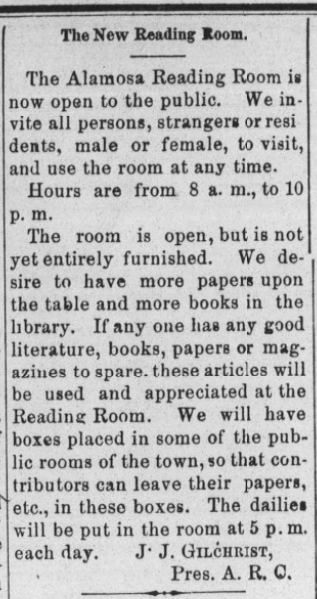
Alamosa's public library roots trace back to the efforts of Presbyterian minister Reverend J. J. Gilchrist and Alamosa Independent Journal owner William H. Hirst. The pair established the town’s first reading room and library in a small space on 6th Street, situated between State and Hunt Avenues. Hirst supplied the necessary capital, while Gilchrist contributed as much as he could.
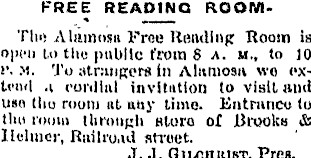
Although this initial venture operated for only about a year before closing, the initiative persisted. The founders opened subsequent reading rooms in 1884—near the Brooks & Helmer clothing store—and again within the Occidental building. While these early iterations were short-lived, they successfully established a lasting desire for a permanent public library within the community.


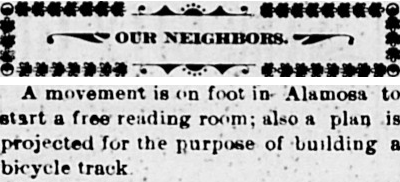
In 1889, a public request was made to establish a permanent reading room in Alamosa.
Not long after, several community members came together to create their own Library Association and set up makeshift libraries wherever there was available space.
The Alamosa Public Library and Reading Room Association was founded on November 4, 1901. Its primary responsibilities included managing the funding and organizing entertainment for the various reading rooms around Alamosa.

